How to Report a Crypto Scam
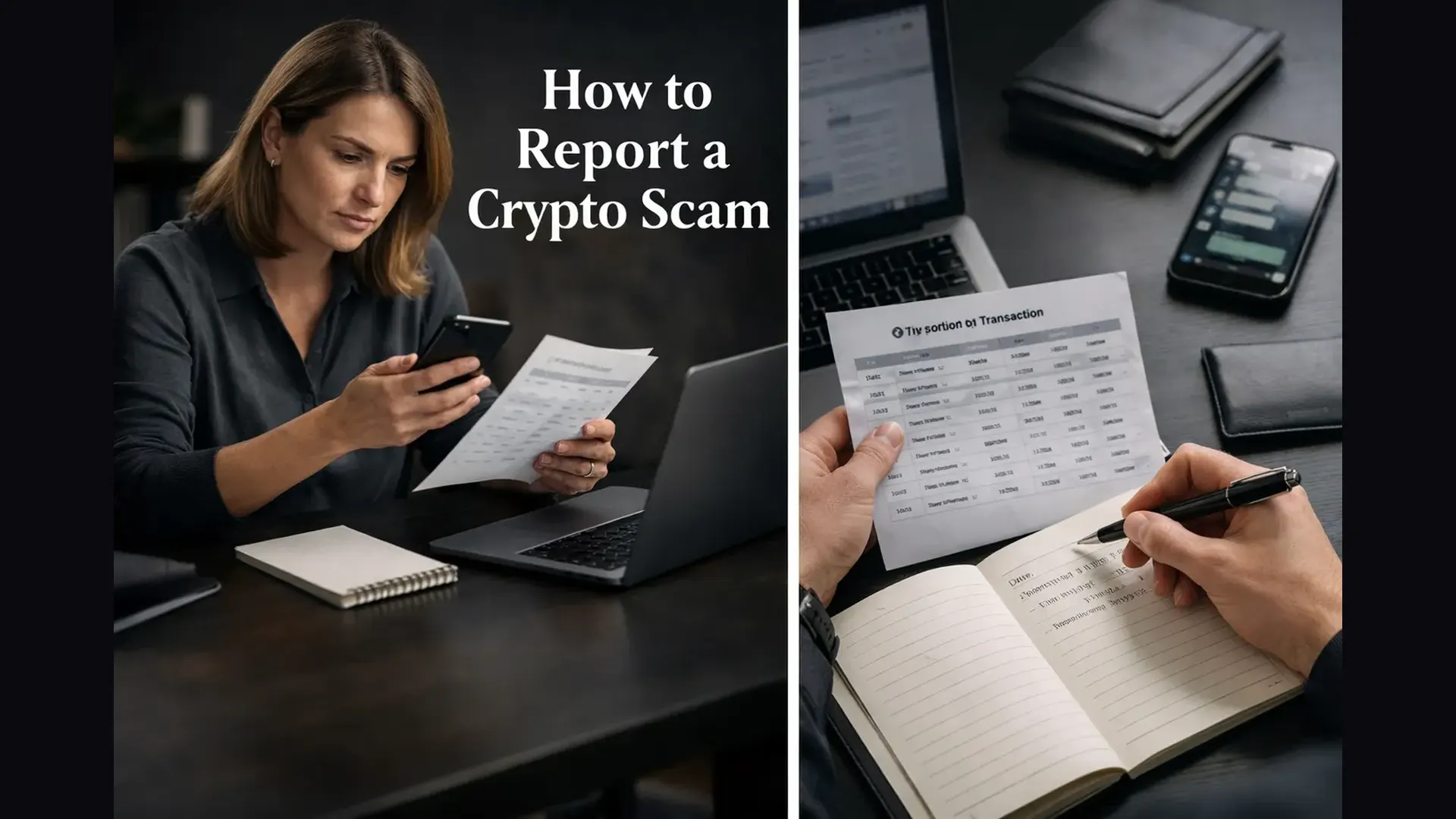
After a crypto scam, many victims feel pressure to act quickly but are unsure where to start. They know they should report the incident, but often do not know what information to include, which platforms to contact, or what type of report is actually useful.
Reporting a crypto scam is not just about filing a complaint. Done properly, it helps preserve the facts, creates a formal record of the incident, and can support later review, escalation, and case handling.
This guide explains how to report a crypto scam, what evidence to gather before reporting, who may need to be notified, and how to make your report more useful from the outset.
Why Reporting Matters
Some victims hesitate to report a crypto scam because they assume nothing will happen. Others report it immediately but provide very little usable detail.
Both responses are understandable, but neither is ideal.
A useful report can help:
- create a documented record of the fraud
- preserve transaction and communication details
- support exchange or platform notification
- clarify the structure of the case
- improve the quality of later review
- reduce reliance on memory alone
Reporting does not automatically solve the case, but it is often an important part of a proper response.
1. Start by Preserving the Evidence
Before reporting anything, make sure the key records are saved properly.
Gather:
- wallet addresses
- transaction hashes
- screenshots of transfers
- exchange withdrawal confirmations
- scam website URLs
- platform dashboard screenshots
- communication records
- fee demands or blocked withdrawal messages
- dates and times of relevant activity
The quality of your report depends heavily on the quality of the information you can provide.
This is one reason the first 24 hours matter so much. Early preservation often makes reporting clearer and more useful.

2. Write a Clear Summary of What Happened
A report is easier to understand when the facts are presented simply.
Before submitting anything, write a short summary covering:
- how the contact began
- what you were told
- what platform or service was involved
- how many transfers were made
- where the funds were sent
- when problems started
- when you realized it was likely fraud
This does not need to be dramatic. It should be factual.
A concise written summary helps ensure that the same core information can be used consistently across reports to exchanges, authorities, and other relevant channels.
3. Notify the Relevant Exchange or Platform
If you know or suspect that the funds were sent to, through, or from a centralized exchange or platform, contact that service as soon as possible.
When doing so, provide:
- your wallet address
- the recipient wallet address
- transaction hash
- date and time
- asset type and amount
- concise description of the fraud
- screenshots if relevant
- any existing report reference number if available
Keep the message clear and direct. Avoid long emotional explanations. The goal is to provide information that can be reviewed efficiently.
If the scam involved a fake website impersonating a legitimate company, report that as well.

Need help understanding what information should be included before reporting?
Request a Confidential Case Evaluation4. Report the Fraud to the Appropriate Authorities
The exact reporting channels vary by location and by the nature of the fraud, but the general principle is the same: create a useful formal record.
Depending on the case, this may include:
- local police
- national fraud reporting channels
- cybercrime reporting services
- financial crime units
- consumer fraud reporting portals
Your report should ideally include:
- a short factual summary
- timeline of events
- wallet addresses
- transaction hashes
- screenshots
- website URLs
- communication records
- platform names
- known aliases or usernames used by the scammer
Be careful to distinguish between facts and assumptions. A strong report is specific, organized, and evidence-based.
5. Keep Copies of Every Report You Submit
This is a simple step that helps more than people expect.
Save:
- report confirmation screens
- case reference numbers
- emailed acknowledgments
- support ticket numbers
- any replies from exchanges or platforms
- dates and times of submission
This creates a documented chain of what was reported, when it was reported, and to whom.
That record can become useful later if the matter needs to be escalated or reviewed again.
6. Do Not Delay Because You Think the Case Is Too Small or Too Complex
Some victims do not report because they believe the amount is not large enough, the case is too embarrassing, the transfers are too complicated, too much time has passed, or no one will care.
That hesitation is common, but it often works against the victim.
Even where a case is complex, reporting still helps create a record and preserve context. The earlier it is done, the less likely important details are to be lost.
7. Avoid Mixing Reporting With Panic-Based Decisions
After a scam, people sometimes rush through reporting while also sending more money, replying to the scammer, engaging random "recovery agents," wiping evidence accidentally, or jumping between multiple explanations of what happened.
This can make the situation more confusing.
Try to separate the steps:
- preserve evidence
- secure accounts and devices
- write the timeline
- report the fraud clearly
- organize the case for review
That sequence usually works better than trying to do everything at once. Be cautious of unsolicited recovery offers — read our guide on signs a crypto recovery service is a scam.

8. What Makes a Crypto Scam Report More Useful
A stronger report is usually:
- factual
- chronological
- concise
- supported by evidence
- clear about the transfer details
- clear about the platform or wallets involved
- easy to read without guessing
A weaker report often relies on scattered screenshots, incomplete transfer details, vague descriptions, emotion without sequence, no timeline, and no distinction between facts and suspicion.
That does not mean a weaker report has no value. It simply means that a better-structured one tends to be easier to act on. For guidance on organizing evidence, see what evidence helps a crypto tracing case.
Want the facts reviewed in a clearer, more structured format?
Start Your Case Evaluation9. When a Structured Case Review Becomes Useful
Reporting and review are not the same thing.
A report creates a record. A structured case review helps examine the facts, organize the evidence, and assess the most appropriate next steps.
That may become especially useful where:
- multiple transfers are involved
- the transaction history is difficult to interpret
- the scam unfolded over time
- a fake investment platform was used
- wallet or account compromise may be involved
- you are unsure whether the visible transaction flow is meaningful
If you want the facts reviewed in a more structured and professional way, Crypto Recovery Authority offers confidential case evaluation for individuals dealing with crypto fraud.

10. Reporting Is Not the End of the Process — But It Is an Important Part of It
Many victims think of reporting as something symbolic. In reality, it can be much more useful than that when done properly.
A good report:
- preserves the facts
- creates a reference point
- supports later communication
- helps keep the case organized
- reduces the risk of losing key details
It may not answer every question immediately, but it is often one of the most sensible early steps after a crypto scam.
Final Thoughts
If you have been targeted by a crypto scam, reporting the incident is one of the most practical steps you can take — but only if the information is preserved and presented clearly.
Start with the evidence. Write a short factual summary. Notify the relevant exchange or platform. Submit the appropriate fraud reports. Save every confirmation and reference number. Then organize the case properly.
If you need help reviewing the facts after reporting, Crypto Recovery Authority offers confidential case evaluation for individuals who want a more structured and professional assessment of their situation.
If you want a professional review of the evidence after reporting, begin with a confidential case evaluation.
Review My Case