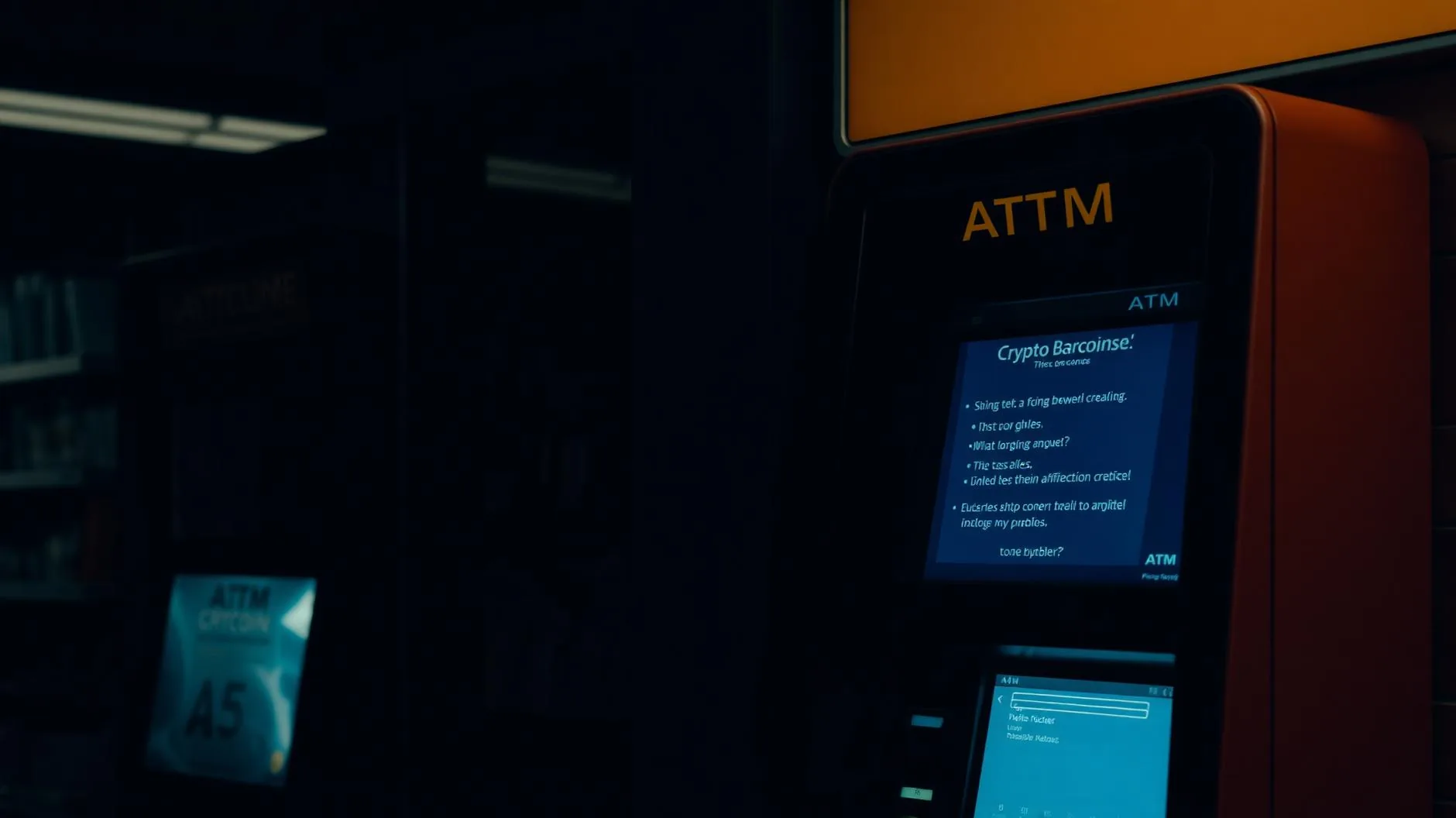
1. How a Crypto ATM Scam Usually Works
The scammer typically creates urgency and authority. Common setups include:
- Someone pretending to be law enforcement
- Fake tech support
- A fake bank fraud department
- A fake government agency
- A supposed account compromise warning
- A romance-related emergency
- A false investment rescue story
The victim is told to withdraw cash, go to a crypto ATM, buy Bitcoin or another asset, scan a QR code or send to a wallet address, and complete the transaction immediately. At the time, the victim may believe they are protecting money, assisting with an investigation, or fixing a serious account issue. That is what makes the scam work.

2. Why These Scams Feel So Final
Unlike some other crypto scams, a crypto ATM transaction feels physically concrete. The victim goes to a real machine, uses real cash, receives a receipt, and sees the transaction process happen immediately.
That physicality can make the transaction feel legitimate in the moment and hopeless afterward. But a wallet address was still used. A transaction still occurred. A record still exists. That is why evidence preservation matters even in ATM cases.
3. What Evidence Matters Most
In a crypto ATM scam, preserve:
- The ATM receipt
- Kiosk location
- Date and time
- Machine operator details if visible
- Wallet address used
- Transaction hash if available
- Any QR code screenshot
- Phone call records
- Chat messages
- Emails or instructions from the scammer
The receipt is especially important because it often anchors the time, amount, and operator details in a single document. A victim who preserves the receipt, wallet address, and communication history is in a much better position than a victim who relies only on memory later. For a detailed list of what evidence strengthens a case, read our guide on what evidence helps a crypto tracing case.
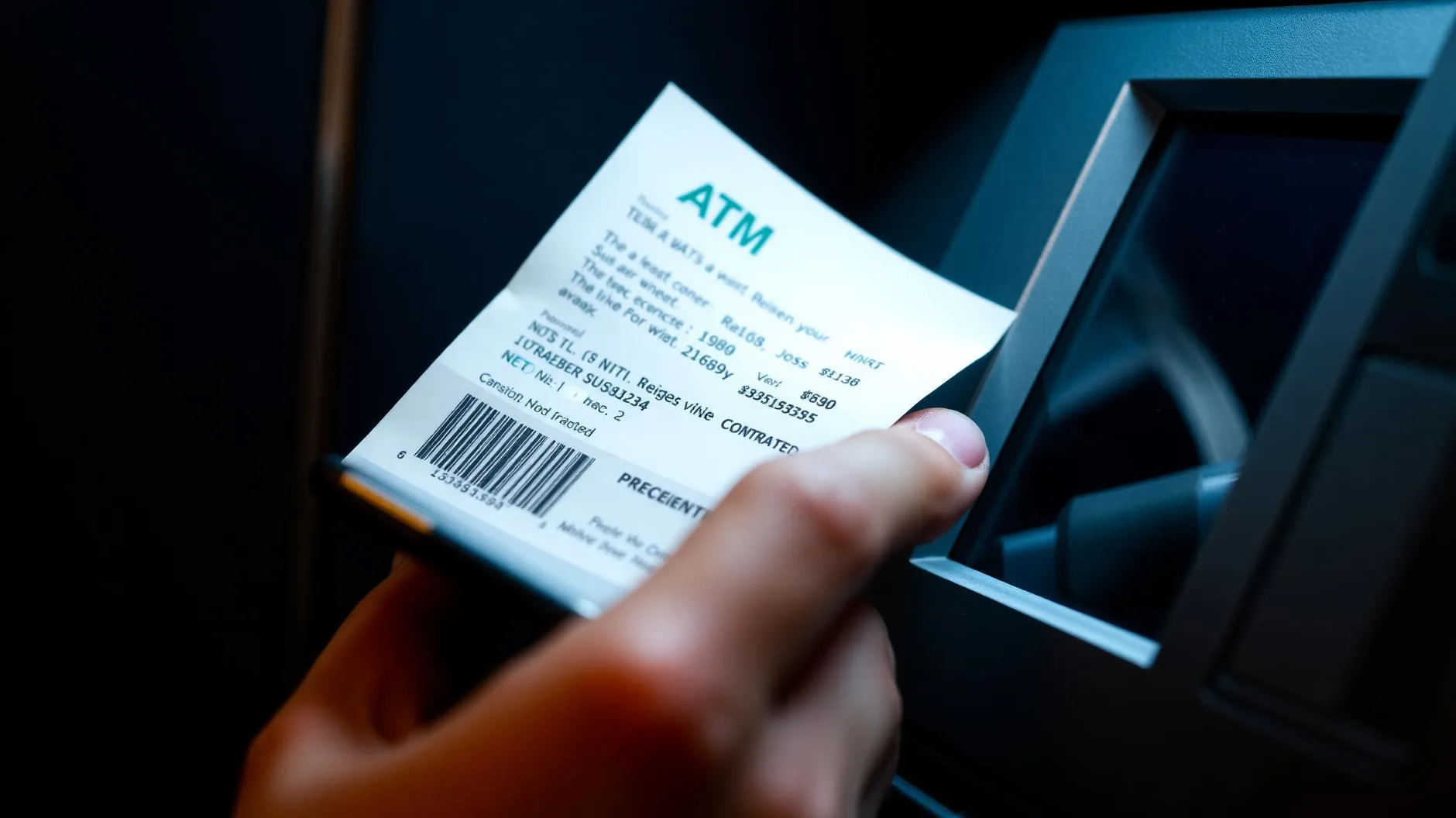
Still have the receipt and wallet details from the ATM transaction?
Request a Confidential Case Evaluation4. Are Crypto ATM Scams Recoverable?
There is no single answer that applies to every case. The more useful question is whether the case can be reviewed meaningfully. That depends on factors such as:
- Whether the wallet address is known
- Whether the transaction can be followed on-chain
- How quickly the matter was identified
- Whether the funds moved rapidly afterward
- Whether the flow appears connected to any known service or exchange
- How complete the victim's evidence is
Some cases are easier to review than others. But even in ATM cases, the transaction trail may still provide useful information. Tracing is not the same as recovery, but it is often part of understanding whether the case has investigative value. Learn more about whether stolen crypto can be traced and how on-chain analysis works.
5. What to Do Immediately After a Crypto ATM Scam
If you believe you were scammed through a crypto ATM:
- Preserve the receipt immediately
- Save all messages or calls from the scammer
- Document the ATM location
- Stop engaging with the fraudster
- Write a clear timeline of what happened
- Preserve the wallet address and any transaction details
- Report the matter promptly
The earlier these details are preserved, the easier the case becomes to understand later.
6. Why Reporting Still Matters
Many victims assume that because cash was converted into crypto at a machine, reporting is pointless. That is not the right way to think about it. Reporting helps:
- Create a formal record
- Preserve context
- Support timeline clarity
- Document the operator and location involved
- Keep the case organized
It does not solve everything, but it helps move the matter from panic into structure.

Need help understanding whether the transaction flow may still be meaningful?
Start Your Case Evaluation7. Common Mistakes After a Crypto ATM Scam
Several mistakes appear often:
- Throwing away the receipt
- Forgetting the kiosk location
- Continuing to take instructions from the scammer
- Relying only on memory later
- Failing to preserve the wallet address
- Assuming nothing can be reviewed
- Trusting a random "recovery" offer immediately after the loss
A case that feels simple at first can become difficult very quickly if the basic records are lost.
8. When a Structured Review Becomes Useful
A structured review may be especially useful where:
- The receipt and wallet address are available
- The amount lost is material
- The scammer used authority or coercion
- The flow of funds may still be traceable
- The victim wants clarity on what happened and what the evidence supports
If you want the wallet movement and evidence reviewed in a structured way, Crypto Recovery Authority offers confidential case evaluation for individuals dealing with crypto ATM-related fraud.

Final Thoughts
Crypto ATM scams rely on urgency, confusion, and the false authority of whoever is giving instructions. But even when cash is involved, the transaction still leaves a trail. If you want to understand the full process, see our guide to reporting a crypto scam.
The most useful response is not panic. It is documentation. Preserve the receipt, the wallet address, the timing, the communication history, and the sequence of events. That is what turns a chaotic loss into something that can actually be reviewed. Our 7-step recovery framework outlines how we approach cases like this.
If you want the facts reviewed in a structured way, begin with a confidential case evaluation.
Review My Case